Mega Data Centers vs Individual Electricity Consumers
Months ago, I wrote the following article and posted it on the Hood County Republican Party’s website - this little cautionary tale will help illustrate just one aspect of how data centers can alter the life of an average Texan:
The Texas Energy Scam, Part 5 (The Jackpot)
In Part 5 of this continuing series, we will attempt to illuminate how the individual electricity consumer gets the short end of the stick in the “new” energy market. Note - electric power pricing below is for illustration purposes only, but they are within ranges experienced in Texas in the past number of years.
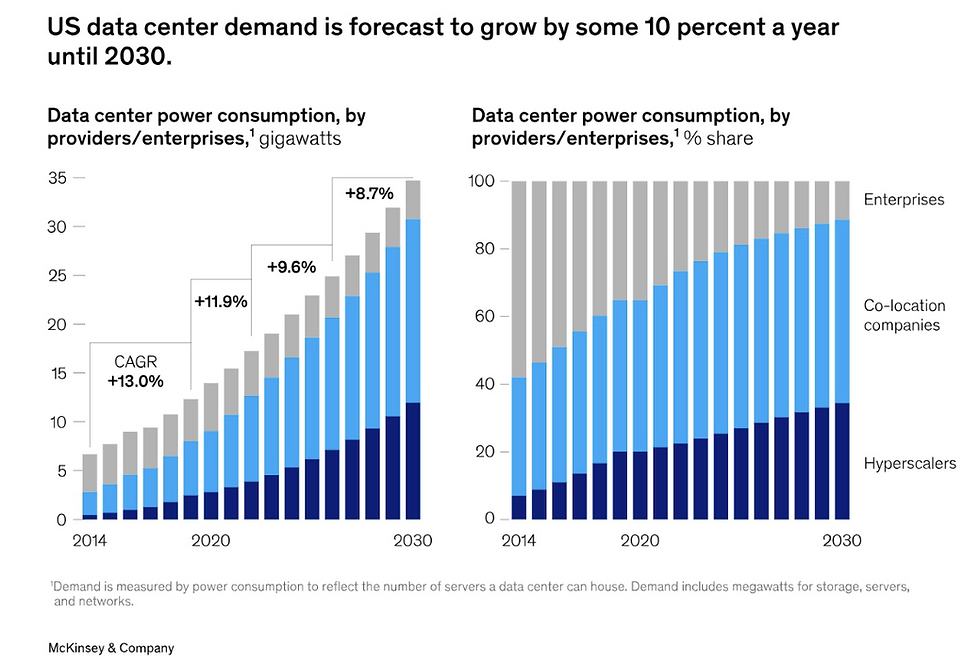
1 - Mega-corporation (we will call them “Mega”) decides to build a 5 gigawatt (GW) data center (or, it could be a cryptocurrency mining operation, as these are very similar) in the beautiful countryside of Texas, because Texas has very few regulatory or environmental hurdles to clear. That’s especially true in the rural area that the new Mega data center will be located. And, as an unexpected bonus, the small Texas county in which Mega locates their facility even awards Mega a huge property tax abatement! By the way, 5 GW is enough to power over 4,000,000 homes.
2 - Mega then enters a long term contract directly with NRG (or Entergy or Luminant or any other Texas electric power generator) to purchase power at a rate of 6.5 cents per kilowatt hour. That’s way below the average cost of electricity, but the power generator recognizes that Mega has a lot of market leverage; also, Mega will be a highly stable and long term consumer of power. In short, the power supplier is happy to enter into an extended partnership with Mega, even at a reduced cost - it’s all about the volume, and it cuts out the middleman, the electricity retailer. Remember, the Texas energy market is deregulated, so that means that a contracted rate with reduced pricing is a common practice.
3 - Now, let’s shift to San Marcos, where JoeBob Retired (his friends call him “Tex”) who is living out the dream in his modest home finds himself in a unique position that he likely doesn’t even know exists. He is competing in a marketplace with Mega for a limited resource - electricity - and Mega has just ‘reserved’ 5 GW of the Texas grid’s (ERCOT) existing generating capacity. In Texas’ deregulated market, prices on the remaining pool of electricity begin to rise, particularly for the smaller, non-contracted consumers like our retired friend Tex. Tex notices that his electric bill is ratcheting steadily upwards - it seems like it’s higher every month, even though he is trying to cut back on his power use. But it’s okay - he gets a part-time job as a greeter at Walmart to make ends meet. And besides, Tex loves visiting with the good folks that make Texas great!
4 - But, it gets even tougher for Tex and his dream retirement in San Marcos. It’s a terrible winter storm throughout Texas, and ERCOT is struggling to stay ahead of the demand on the grid as Texans wrestle to heat their homes. The wind turbines are frozen and the solar panels are covered in snow (not to mention the fact that there’s been little to no sunshine for over two weeks), shifting the record power loads to the conventional natural gas and coal generating plants. Now, these gas- and coal-fired power plants are forced to run beyond their design capacity for an extended period, because ERCOT has very little reserve capacity even under normal loads. As a result, many of the conventional power plants are in danger of going off-line due to weather challenges combined with the extreme load they are carrying. And in Texas’ deregulated marketplace, prices for electric power are skyrocketing to unprecedented levels! ERCOT reaches out to some of the contracted data centers, like the one operated by Mega, to ask them to reduce power consumption during the crisis. Mega agrees, and effectively “sells” their contracted power back to the grid - but not at their attractive volume-based 6.5 CENTS per kilowatt hour rate, but at the then current market rate of 5 DOLLARS per kilowatt hour!
5 - The following month, when Tex gets his electric bill, he is devastated. The bill is the highest he’s ever seen, because it includes a component that passes through the peak power cost of 5 dollars per kWh - money paid to Mega to keep Texans from freezing. There’s no way Tex can budget for an electric bill this massive, so he’s forced to sell his prized bass boat, “Miss Tex” in order to keep the lights on in his humble home.
Meanwhile, in the posh California offices of Mega, record profits are celebrated due to their most excellent power arbitrage play down there in rural Texas - sushi and champagne for everyone, y’all!
Greg Harrell



Comments